Gutter Repair Hackettstown for Improved Roof Drainage Efficiency
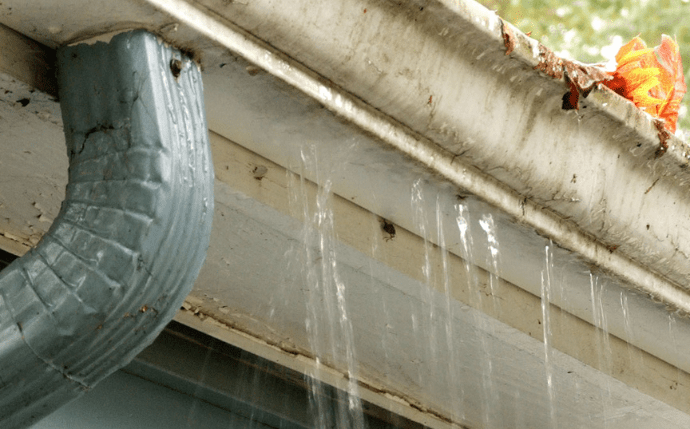


A gutter system rarely gets much attention until it fails. Then the signs show up fast: water overflowing at the eaves, dark streaks on siding, mulch washed out of flower beds, and basement walls that start feeling damp after a hard rain. In a place like Hackettstown, where weather moves through in distinct seasons and rooflines often carry a mix of leaves, twigs, and winter debris, gutter performance matters more than most property https://louisptfb967.theburnward.com/when-to-repair-instead-of-replace-gutters-in-hackettstown owners realize.
Good roof drainage is not just about keeping rain off your head when you open the front door. It protects fascia boards, soffits, siding, foundation walls, walkways, and landscaping. It also helps extend roof life by directing runoff where it belongs instead of letting water linger along the edge. When homeowners ask about Gutter Repair Hackettstown services, they are often reacting to a visible leak or sagging section. The better question is what that problem is already doing to the rest of the house.
I have seen small gutter issues turn into expensive structural repairs because they were dismissed as cosmetic. A loose spike on one run does not look serious from the ground. Give it a season of rain and freeze-thaw cycles, and that same section can pull away far enough to dump water behind the gutter. Once that happens, the roof edge and sheathing begin to take the hit.
What efficient roof drainage actually means
Roof drainage efficiency comes down to one basic outcome: the right amount of water moves off the roof, through the gutter, down the downspout, and away from the house without backing up, spilling over, or soaking the structure. That sounds simple, but several moving parts have to work together for it to happen.
Pitch is one piece. Gutters need a slight slope toward the downspout. Not a dramatic one, just enough for water to move instead of pooling. Fasteners are another. If hangers are loose or spaced too far apart, the trough can sag under the weight of water and debris. Seams matter too. Older sectional gutters often fail at joints long before the metal itself wears out. Then there is capacity. A gutter can be intact and still perform poorly if it is undersized for the roof area above it or if too few downspouts are handling runoff.
On many homes in Hackettstown, mature trees add another layer of wear. Leaves and seed pods do not just clog the channel. They trap moisture against metal, create sludge in the bottom, and force water to spill over the face. In winter, clogged sections can contribute to ice formation along the edge, especially where attic insulation and ventilation are already less than ideal.
The local conditions that make repairs more urgent
Hackettstown properties deal with a little of everything. Summer storms can dump heavy rain in a short burst. Autumn loads the gutters with organic debris. Winter creates cycles of melting by day and refreezing by night. Spring often reveals the damage that built up quietly over the colder months.
That pattern matters because gutter systems fail differently under each condition. A summer overflow might point to clogging or insufficient downspout flow. A winter issue can involve expansion from trapped ice or brackets that loosened under weight. In spring, homeowners often spot peeling paint on trim boards or erosion channels near the foundation, both signs that water has been escaping for a while.
I have also noticed that many homes in older neighborhoods have a mix of repairs from different decades. A newer section may be tied into an older run, or one side of the home may have upgraded seamless gutters while the rear still uses sectional aluminum with aging sealant. These patchwork systems can work for a time, but they often lose efficiency at the transition points.
Signs your gutters are not draining as they should
Some symptoms are obvious. Others are easy to miss unless you know where to look. Overflow during rain is the clearest red flag, but it is not the only one. If you see zebra striping on the outside face of the gutter, that usually means water has been repeatedly flowing over the edge. If nails or screws appear on the ground below the eaves, the fastening system is likely failing. If the gutter looks straight from one angle but twisted from another, the slope may be off.
Watch the ground too. Soil displacement beneath roof edges tells a story. So does a walkway that remains wet long after the storm passes. Indoors, paint bubbling near upper window trim can sometimes trace back to a drainage issue above, not a window leak itself.
Here are a few common clues worth taking seriously:
- Water spilling over the front or back edge during moderate rain
- Gutters pulling away from fascia or showing visible sagging between hangers
- Rust spots, pinholes, or recurring leaks at seams and end caps
- Downspouts that drip at elbows or back up at the top opening
- Erosion, standing water, or damp basement walls near the foundation
Any one of these can reduce roof drainage efficiency. In combination, they usually mean the system needs more than a quick cleaning.
Repair versus replacement, the judgment call that matters
Not every failing gutter needs to be replaced. That is one of the biggest misconceptions in this trade. A targeted repair can restore full performance if the underlying material is still sound and the problem is localized. Replacing a short damaged section, rehanging a run with proper spacing, resealing joints, or adding a downspout can make a major difference.
The trick is knowing when repair is honest and when it only buys a little time. If the metal is badly corroded in multiple areas, if the gutter profile is warped, or if the fascia behind it has softened from prolonged moisture, repair may not be the best use of money. The same is true when a system was poorly designed from the start. A shallow trough on a steep roof plane may overflow even if it is technically intact.
I have walked properties where the owner had resealed the same seam three times over two years. The seam was not the real problem. The downspout was undersized and partly obstructed, causing water to linger and stress the joint during every heavy rain. Once the flow issue was corrected, the leak stopped returning.
For homeowners considering Gutter Repair Hackettstown work, this is where an experienced eye matters. The visible failure point is often not the root cause.
The repairs that most often improve drainage performance
A well-chosen gutter repair does more than stop a drip. It restores hydraulic flow through the system. The best repairs usually target movement, alignment, and discharge.
Rehanging is one of the most effective fixes. Older spike-and-ferrule systems loosen over time, especially on homes where fascia boards have aged or where snow loads have been significant. Replacing them with modern hidden hangers, spaced appropriately, stiffens the run and holds the pitch. That alone can stop standing water and reduce future separation from the roof edge.
Seam repair can also help, but only if the joint is stable. Cleaning, drying, and resealing a seam works when the pieces still fit tightly and the gutter is not flexing every time it fills. If movement continues, the sealant becomes a temporary patch.
Downspout work is another overlooked category. A crushed lower elbow, a poorly placed extension, or a connection that leaks at every joint can make the whole system seem inadequate. Sometimes adding one extra downspout at the far end of a long run solves chronic overflow better than replacing the entire gutter.
End caps, outlet drops, miters at corners, and splash management at the discharge point all affect performance too. Efficient drainage is a chain. The system only works as well as its weakest link.
Why slope and hanger spacing are so important
People often assume gutters should look perfectly level. From the street, that seems right. In practice, they need a subtle fall toward the outlet. Too little slope and water ponds. Too much and the front edge can appear uneven, while water may rush past debris and concentrate at one point.
The challenge on existing homes is that rooflines are not always perfectly straight. Fascia boards can crown or dip. Settling and prior repairs can create inconsistencies. Good repair work accounts for these realities instead of forcing a textbook measurement onto an imperfect structure.
Hanger spacing matters for the same reason. A gutter full of stormwater gets heavy fast. Add wet leaves and the load increases sharply. If support points are too far apart, the trough bows between them. Once that happens, water settles in the low spots, debris accumulates faster, and the weight increases again. It becomes a cycle.
This is one reason bargain repairs tend to fail. If a contractor simply screws the loose section back where it was without correcting spacing or checking substrate condition, the gutter may look fine for a few weeks and then start dropping again.
The role of fascia and roof edge condition
Not every gutter issue starts with the gutter. Sometimes the roof edge assembly is the weak point. If fascia wood has rot, fasteners lose holding power no matter how good the hardware is. If drip edge flashing is missing or poorly integrated, runoff can curl behind the gutter instead of entering it cleanly. That often gets misdiagnosed as gutter overflow.
I once looked at a home where the owner was convinced the front gutter was undersized. In reality, the trough was adequate. The roof edge lacked proper flashing in one section, so water was tracking behind the gutter during heavier rain. The evidence was not in the gutter at all, it was on the fascia and soffit. Once the edge detail was corrected and the damaged wood was replaced, the existing gutter performed normally.
This is why a meaningful repair assessment should include the mounting surface and roof perimeter, not just the metal channel.
Cleaning alone is not always enough
Routine cleaning is necessary, but it is not a cure-all. A cleaned gutter with poor pitch, separated joints, or failing fasteners is still a failing gutter. Debris removal restores capacity, but it does not correct alignment or structural weakness.
That said, cleaning often reveals the true condition of the system. Small pinholes hidden beneath sludge become visible. Standing water lines show where the low spots are. Loose outlets and seam gaps become easier to spot once the debris is out.
For heavily treed properties in Hackettstown, cleaning frequency depends on the canopy, roof design, and whether guards are installed. Some homes need service once a year. Others do better with two visits, one after spring seed drop and one after autumn leaf fall. The right schedule is practical, not theoretical. It should reflect what actually lands on the roof.
Gutter guards, useful in some cases, overrated in others
Gutter guards can reduce maintenance, but they are not universal solutions. On some homes they perform well, especially where the debris type is mostly broad leaves and the roof pitch helps shed material. On others, particularly where small seed pods, pine needles, or granular roofing debris are common, guards can still require regular attention.
The main thing to understand is that guards do not fix bad gutters. Installing them over a mispitched or loosely mounted system can hide a problem while allowing water to keep overflowing in the same places. Repairs come first, accessories second.
A homeowner once told me their gutters had guards, so they assumed the overflow meant the roof was leaking somewhere above. The actual issue was that the rear run had sagged enough to hold water beneath the guard surface. The cover reduced visibility, which delayed the diagnosis. Once rehung and flushed, the system worked as intended.
Cost, lifespan, and where repair delivers the best value
Repair cost varies with accessibility, height, material, extent of damage, and whether surrounding woodwork also needs attention. A straightforward reseal or hanger replacement is one thing. Correcting slope on a second-story run with fascia repair is another. Honest pricing reflects labor conditions as much as material cost.
In terms of value, repair tends to pay off best when the gutter body is still fundamentally serviceable and the failure is concentrated in support, sealing, or discharge. That is especially true if the rest of the exterior envelope is in good condition. Spending moderately now to restore drainage can prevent far more expensive work later on siding, trim, insulation, or foundation waterproofing.
Typical issues and what they often imply include the following:
| Problem observed | Likely cause | Best response | | --- | --- | --- | | Overflow at one section only | Clog, poor slope, or undersized outlet | Clean, re-pitch, inspect outlet | | Repeated seam leaks | Joint movement or standing water | Stabilize support, reseal, assess pitch | | Gutter pulling from house | Loose fasteners or weak fascia | Rehang with proper hangers, repair substrate | | Water near foundation | Short extensions or poor grading | Extend discharge, redirect flow away | | Winter ice at eaves | Drainage restriction and heat loss factors | Clear system, inspect attic and roof edge |
A table like this never replaces an on-site evaluation, but it shows how connected the issues are. What appears to be a gutter problem may also involve grading, flashing, or attic conditions.
Choosing a repair approach that lasts
The best gutter repairs are the ones you do not have to think about after the next storm. That usually comes down to workmanship and diagnosis more than product branding. Material compatibility matters. Aluminum, steel, sealants, screws, and brackets should all be chosen with exposure and lifespan in mind. More important, the installer should understand water behavior on that particular house.
A long straight run over a front porch may need a different strategy than a short rear section under heavy tree cover. A steep roof dumps water aggressively. A lower-slope roof may move it more slowly but over a wider area. Multi-level rooflines can overwhelm lower gutters if upper downspouts discharge poorly. There is no one-size-fits-all repair template.
If you are hiring for Gutter Repair Hackettstown, ask practical questions. Will the contractor check pitch after rehanging? Are hidden hangers being used, and at what spacing? Will downspout connections be tested with water? If fascia damage is found, is that addressed directly or left for later? A good answer sounds specific, not generic.
A few maintenance habits that protect the repair
Once repairs are made, maintenance should be simple and consistent, not obsessive. You do not need to inspect the roof edge every week. You do need to pay attention after major storms and at seasonal transition points.
A sensible routine looks like this:
- Check for overflow during one solid rain each season
- Keep downspout discharge clear and directed away from the foundation
- Remove visible debris from roof valleys before it washes into the gutters
- Look for new fasteners on the ground or fresh separation at corners
- Schedule cleaning based on tree cover, not just the calendar
These habits help you catch small shifts before they become structural problems. They also make it easier to tell whether a recent repair is holding up the way it should.
Why timely repair protects more than the gutter itself
Water is patient, and houses are full of materials that deteriorate quietly when moisture is allowed to linger. By the time a homeowner notices interior staining or exterior wood damage, the drainage failure may have been active for months. Gutters sit at a critical junction between roof runoff and the rest of the building envelope. When they work, they are almost invisible. When they do not, the damage spreads outward and downward.
Improved drainage efficiency means less splashback on siding, less saturation at the foundation line, and less risk of moisture cycling into wood trim and roof edges. It also means safer walkways in winter, since discharge can be managed away from entrances instead of freezing where people step. On properties with finished basements, that added control can be especially valuable.
For many Hackettstown homeowners, gutter repair is one of the more cost-effective exterior upgrades because it protects so many other assemblies at once. It is not glamorous work, but it is practical, preventive, and measurable. You can see the difference the next time it rains.
A properly repaired gutter system should carry water cleanly, stay tight to the house, and discharge far enough away that the foundation stays dry. That is the standard worth aiming for. When the system reaches that point, the roof does its job better, the walls stay drier, and the home has a stronger defense against the weather that rolls through every season in Warren County.
Just Gutters LLC
Address: 262 Main St, Hackettstown, NJ 07840
Phone number: +12013319454
FAQ About Gutter Repair Hackettstown
What is the average cost to repair gutters?
The average cost to repair gutters is about $390, with most jobs ranging from $120 to $900 depending on the damage. You can explore detailed data and estimates on Angi.
Can I repair a gutter myself?
Yes, you can easily repair most common gutter problems yourself if you are comfortable working on a ladder.
How much does it cost to repair a leaking gutter?
The average cost to repair a leaking gutter ranges from $75 to $350. Most homeowners spend around $150 to $250 to hire a professional to patch small holes or reseal leaking joints. If the damage is severe and requires replacing entire sections, the price can increase from $300 to $800.